
DTL -The Interviews: Warden Cathy Fontenot


 Apple Podcasts

 Spotify

 Castro

 RSS Feed
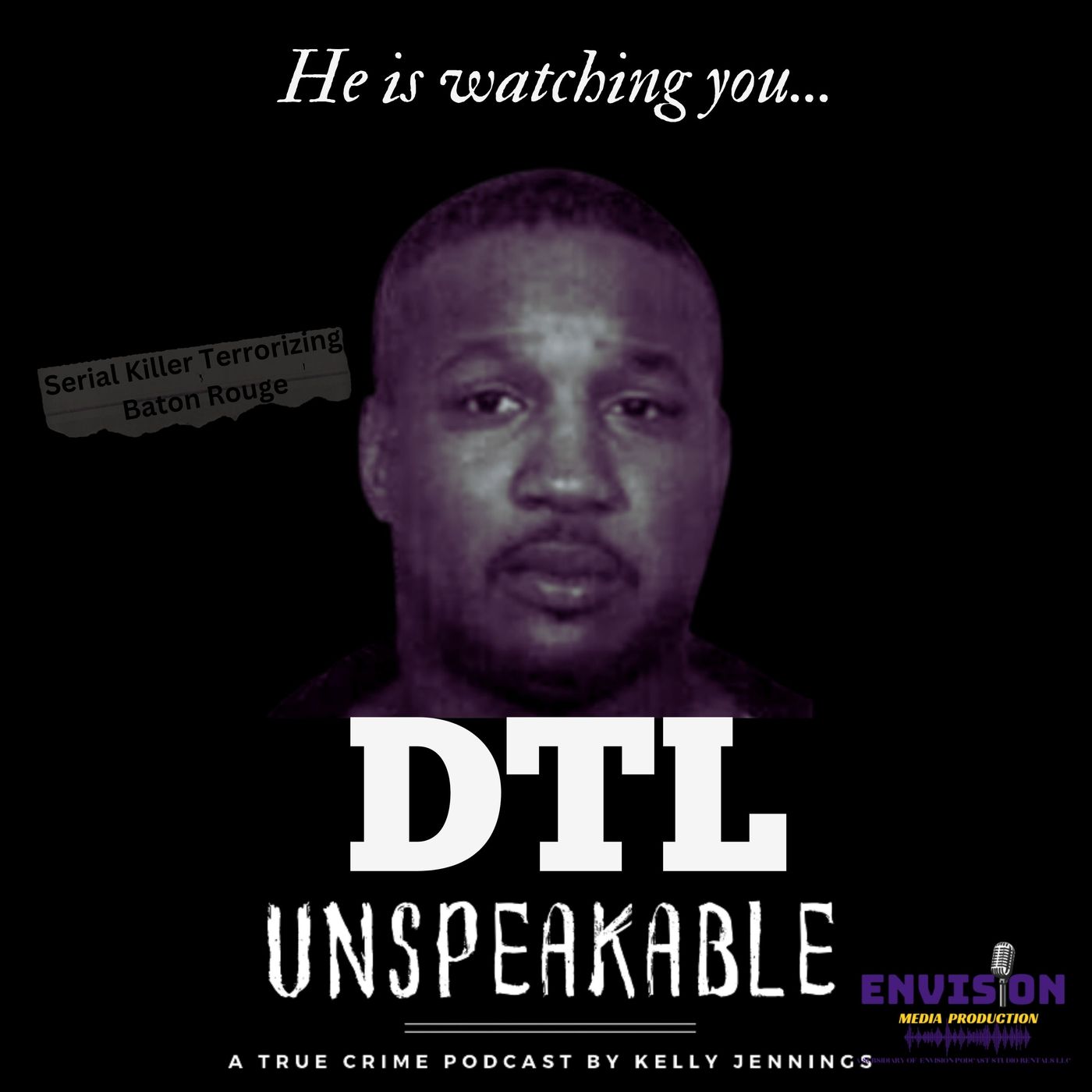
In this episode of DTL, Cathy Fontenot, former Assistant Warden at Louisiana State Penitentiary at Angola and current Warden of the East Baton Rouge Parish Prison sits down with Kelly Jennings for an exclusive interview on her personal recollections of the serial killer.
Hosted by Kelly Jennings and produced by the experts at Envision Podcast Productions.
For Media or Advertising Inquiries
Envisionpodcaststudios@gmail.com
0:09 In the sultry heat of Louisiana, where the Bayous whisper secrets and the air hangs heavy with the scent of magnolias, a darkness lurked beneath the surface. Dereck Todd Lee was a man whose charm masked a sinister reality. He was a monster. Lee, a seemingly ordinary man with a disarming smile, led a double life that would unravel in a series of murders in the capital city of Baton Rouge and the surrounding areas. As the first reports of disappearances and murders began to surface, South Louisiana was thrust into a nightmare, igniting a frantic search for answers. The true horror was just beginning, and the hunt for a serial killer eventually known by just three letters, would reveal not only the depths of Dereck Todd Lee's depravity, but also the resilience of those most affected by his evil acts, the families and the survivors.
1:00 This is DTL. Once Derek Todd Lee was convicted, he was off to spend the rest of his life behind the wire in the world's largest maximum security prison, Louisiana State Penitentiary at Angola. When prison officials are dealing with high profile inmates such as Derek Todd Lee, there is a process. This process is designed not only to ensure the safety of the public, but like it or not, the safety of Derek Todd Lee as well. This responsibility falls directly into the hands of the staff at Louisiana State Penitentiary to see it through.
1:40 Joining with me today is former assistant warden at Louisiana State Penitentiary at Angola, Kathy Fontna. She's going to help me paint a picture of life inside the prison for the now notorious Dereck Todd Lee, starting with his arrival. Once they are given their sentence, that's the bifurcated trial. You know, he's been found guilty in one trial and they wait twenty four hours and then they'll start another trial, which is for the life or death sentence. Baton Rouge is one of the They handled that case relatively fast, faster than a lot of other parishes do. And in this case, you know, he got death. He's by himself. He's not gonna be loaded up in a bus. It was usually a fifteen passenger van that he would be loaded in and definitely lots of security, sometimes probably three and then you're gonna have a lead car outside of that van to make sure that he's nothing is happening along the way. You know, because this is a serial killer, lots of people were lives were forever changed, and so he would have been transported, and he was transported from the courthouse downtown Baton Rouge all the way to Angola.
2:48 You know, it's about an hour drive. When they hit that get off Highway sixty one, you're pretty much there, thirty mile road. They'll be looking at houses here and there, trees far away. It's kind of a winding, hilly road. It's a lot different from a lot of the Louisiana flatland that we have. It's kind of buttoned up against state line Mississippi, so it's a different terrain and you got to be thinking in your head, you know, this is the last time that I'll be looking at that. And what was really weird about him. He was from Westflechianna, so he's seen this part of the world before, but again never. You know, and go a literally. Dead ends at the end of this road. And remember that he came late in the afternoon. Possibly the night. I remember it was getting dark darkish when they did this, and so he came immediately. They drove him to the back.
3:34 At the time, death Row was actually located at our RC center, which is the first building right inside the gate, so he was he was driven into the front gate, went around into the back of the RC building which is where the death Row inmates were housed. And I remember that when they got him out, no one was to say anything. He was just they basically just sort of led him in. There were officers all around him just walking him in the door. It was really quick and you know, there was no stopping. It was just getting him in there and getting him out full restraints. What we normally do is also with what's called the black box, which is over the handcuff so that they cannot manipulate the cuff. It's typically used in a high when you have a high profile, high risk case like that.
4:23 All death penalty cases are treated like their high risk. The head warden at the time of Derek Todd Lee's arrival at Angola was none other than Warden Burle Kane. Warden Kane, at this time had been in corrections for nearly thirty years having become warden at Angola eight years prior to Lee's conviction, and Warden Kane well, he had a reputation as a no nonsense warden who was tough but also fair. Dtl's incarceration was very high profile, and with that, Warden Kane instituted specific policies that went beyond that of the typical inmate arriving at the prison. Wardon Kane always would talk and put his input into how he wanted things handled. I remember that he was told I don't know whether media was out. I think media was outside the gate. They were not let in the prison, but they were outside the gate, and there was like you should not talk or say anything or anything like that. And so it was just that he wasn't going to give the opportunity to give a statement for se or make like a purp walk. That would be you know that that would all would have been handled at the courthouse. But when it gets to Angola, it's it's strictly our establishment of Hey, this is what it's going to be like for you. It's going to be very regulated your movement. You're not going to be free to walk around, You're not going to be selling or a rodeo or anything like that. You're going to be escorted by people. You're not going to be having interactions when you don't need to have interactions just because
5:54 you're and they marched them. Right up to that, to the to the cell. While DTL was very high profile, the process still remain the same as it relates to the intake process inside of the prison. No steps would be skipped, though due to his status as a death row inmate, it would be a shorter process than that of the typical inmate. The classification intake process normally is a little bit His was would have been shorter than somebody else because he's gone to death row. The classification process is to see where you're gonna go With lifers, you know, you have to consider, you know, who your enemies are and things like this. In this case, he's a death row inmate. Everybody is kind of considered an enemy. You're not going to be with them at that time. Now they do actually let death row inmates, they open up the gates and they live sort of like in general population. With that, at this time, they did not some of the questions that a normal typical intake would take on a life or inmate or somebody with fifty years or so.
6:51 Are not done with a death row inmate. It's basically getting information, who's your next to ken, who's your emergency contact. Medical is a big part, a huge part, you know, and we knew in his case he had a heart condition, so that was something too that medical had to check him out. Lynn Marino, the mother of Pam Kennimore, became aware that Lee had a heart condition just prior to Lynn's death in twenty fifteen. She learned that Lee was being considered for a pacemaker, and the outspoken mother of Pam didn't hold back her opinion on this very subject. From the perspective of prison officials and even outside of any personal beliefs they may have shared with the heartbroken mother, they had a responsibility. That was a big issue with Miss Marino. She felt a certain way about, you know, why are we keeping them alive? And people would do that? You know, you remember from tours yourself, Well, why do you care if they hang themselves when they're here? Well, because we are in forces of the law, and the law says that you were going to be executed this way. It's a very you know, we have rules about this happens, and this happens, and this happens. We don't just go in there and execute anybody the way that we want right and the same thing for any of the inmates of your sense to fifty year. My job is to make sure you spend that fifty years there. Now, you could die before that, but it's not going to be because I don't try to save you if you try to.
8:07 Take yourself out. I've said this before in an interview. When inmates commit suicide, it's really like an escape. It's an escape from custody. They're decided that when they're gonna they're decided what time they're going to serve, and so it's you know, as a correction. Professional things that we do don't make sense to the general public a lot, but they make sense to us because we realize that there's you know, in addition to we're supposed to be transforming help transform someone's behavior, we're also enforcers of the law. And so with a death penalty, you've got to be really, really careful because number one, you can't take it back once you do it. Number Two, you've got a lot of resources that have went into this You've got a lot of victims that are depending on you. You've got the public safety is dependent on you.
8:57 We can't have the. Most deadly people that we have that have been convicted of not only never returning to society, but we're going to one day, you know, put you in the ground according to how the law says. So that's a very serious thing and we take it very serious. You don't want to have somebody on that team, es Gordnerman, this real gung ho about it. You also don't want to have somebody that doesn't want. To do it. You have to have people that are pretty focused on what it is they're doing and know the intention of what they're doing. It's a professional thing and not many people get to do because it's such a small portion of the thousands of inmates that you have. Routine is everything inside of a prison, especially as it relates to death Row, and Derek Todd Lee, well, he would have to come to terms with that as well.
9:43 Freedom in the life of this serial killer it would now become nonexistent. Living on death Row at that time was basically they were in the older building. It was pretty isolated. Only certain staff were working in that area. It was a really limited classication and social work staff, mostly officers who were pretty experienced officers. We didn't have new officers who had just started their careers assigned to there, so they were pretty you know, officers who sort of knew what they were dealing with the population. I think it's important to know that in ninety six when I got there, there was forty eight inmates there and we went as high before the new facility was built to one hundred and one. We only had one hundred and one sells at RC, So that's what really in addition to the fact that we had a breakout, we had to build a new facility in two thousand and seven. So at that time, though on the old death Row, they had old phones, you know, on the wall, and they would do it. It was pretty much twenty three hours a day in a cell. They got to walk outside of the tier.
10:51 It was sort of a darker sort of a darker environment, lots of concrete floors, concrete bed that it would have a small thin mattress on it that we made the prisoners made at the main prison in the mattress shop they have. It was about a six by eight cell. It was longer than it was wide, and they had a TVs and fans, so it was really loud for you to They got accustomed to hearing the TV over the fan, but to me when I would walk down, which was sort of a weird, eerie feeling because you'd walked down this long tier and you were looking at them, and then the way back up you realize they're looking at you, and it's sort of like this, you know.
11:37 Really kind of quiet, quiet area. It was never really loud except for the fans and the TV that you'd hear, you know. Ever, occasionally a toilet flushing. I remember talking to inmates and they could tell who was brushing their teeth because they got so for me, with the way somebody sounded, they could know that, you know. They used to do things like with their meals too, where they'd pass the tray with their hands outside of the cell down like if somebody liked more bread than the other one, they would do that. So they had this really weird way of connecting with each other because they spent so much time together, but they were not physically together until someone was allowed outside of the tier, and they would maybe play chess outside, like one would be out on the tier. We actually bought them dominoes, which was not a good idea because that's what they used to break out during the January escape in nineteen ninety nine. Nineteen ninety nine was not a good year for US. We had three high profile things that happened, two big escapes, and then our captain was killed during a hassa situation that year. It was not a good year nineteen ninety nine. But that's one thing they used. They had painted the dominoes because we let them have art. You know, so much of watching inmates as controlling behavior and if they behave you've give them things, which ironically, after nine to eleven, the terrorists we found a manuscript. The FBI was talking about this. They found a manuscript and they said, do whatever they say to do, and they'll give you the tools that he'll need to escape.
13:02 And that's what they do, and it's like the But what they did was with the they had cut the hacksawed through the cell bars because they realized that the wells were hollow and that was not supposed to be. There had been something in the eighties had gone wrong there and they apparently didn't check and these bars were vulnerable, and so they got hacksaws and they cut It took like sixteen hours. I think. Dale Craig told us that after the escape, when we apprehended them, they cut through the wells and what they did to keep the bars from falling was they painted the dominoes and stuck them together and had that sitting on the bar. So he actually gave a tour right before that escape, like a couple of days before, I would imagine, and I walked by and it was weird because dale Craig never it was always in his bed, he never got up to look at the tours, but he was standing there like this holding the bars and you know, looking back and like the sucker was holding those bars in place. And because I thought it was weird that he was up there. And that's something else.
14:01 You start, not really a paranoid, but you notice things and it might not occur to you obviously why you notice them, but you do notice the differences of things, and they do too, and they're much better at it than we are, because if we would be, that thing would not be very healthy for us. Now, life in prison, for the staff, it can be dangerous, the inmates watch, they observe, and they take note of everything. If you style your hair a different way, if you appear depressed, even if you feel happier than usual, the inmates are gonna pick up on that, and they may even try to take advantage of it. When you have such a large residential area next to this big thing, they're gonna see. They're gonna see people break up, they're gonna see people get together. They're gonna they're gonna see that. They're always watching because their life depends on the ability for you to do your job professionally correctly. It does, and you're gonna have an interest in that. So yeah, that's one of the things that you know, when I was going through my divorce, they would be like, you know, miss hey, miss Kathy, how doing you know? I'm fine? You know, oh, your hair is really looking good today. You know what, I don't tell you that. I don't need you to tell me that my hair is looking good, or hey, I need you know. They come up to, oh I need a favor. Well, I don't do favors, but what can I do to help you? Always redirecting back to I'm here to help you and you need to respect me. And you know, even though you might see me sad or whatever, because I'm a human being, I see that in you too, and so you know, it's not a lot of magical science.
15:26 It's not difficult work, but it's very important work. It's basic human you know, interactions that should keep you safe. I had a lot of respect from the inmates. Of course, my job was one that was programming, so it was something they look forward to doing right, and so they liked me because of that. But I was also honest, and you know, when I didn't know an answer, I would find it. I didn't lie to them. That's something that Worton Kane always stress. Do not lie to them, you know, tell them the truth when you know it. If you don't know, find out, be patient, you know, be askable, you know, let them come up and ask you something. I remember one time I was walking down the main prison and they're there. There was an inmate who. Was running on the yard up to we were sort of elevating on that walk, and I heard him yelling my name, you know, weren't find it, weren't find to stop, and I stopped. I always stopped, you know, and I stopped.
16:11 I was inside the gate and he was on the side and when he got to the gate, almost out of breath, he said, he said, oh, I just wanted to look at you. Well, there was an inmate trustee who was doing yard work and he overheard that inmate say that to me, and of course I was gonna handle it. And that inmate. I I caught him coming forward to that inmate and I was like, I was like, oh, wait, wait ho. I said, uh, you know, don't worry about it. And I looked at the other inmate and I'm like, well, next time you are you yell for me. You have a problem that I can help you with. And the other inmate said, and I said, don't do anything, because I could tell he was like really angry, and he's like and he looked at the guy and he said, that's the warden that does good things for us, and he said, don't mess with her like that. And he was just like showing me. So there is you know, we are in the South. There are more there are more people who want to treat women better in there.
17:07 They've been raised by women, they've been raised by grandmothers. And I've heard inmates before say you know that could be your sister or whatever. So they do that, but there are inmates that they're there for not treating women well at all. And so you've got this combination, and you've got more females at that time coming into the profession working with them on the dormitories, and so you really have to you really have to make sure that the environment is safe for everyone involved. Fear wasn't something Kathy Foteau would often feel, even behind the wire walking amongst Louisiana's most dangerous inmates. Over her many years and corrections, she can only recall a few instances where an overwhelming sense of fear would surface while interacting with the inmates, and one of those inmates would be none other than Derek Todd Lee.
17:53 There is only three or four inmates in my career in thirty years that I've walked by felt fear, like just just natural fear to stay away. He's definitely one of them. His eyes were black. It's sort of just when you walked by him, you could feel that he just had no respect for you. You can feel that after a while, especially in a place where everybody you've earned the respect, and you can tell, I mean they're like good morning, right. Well, he never never would speak, never would look at you. He looked at you more like something that he did despised or it was it was like a despise. You could feel it coming off of him. He was not somebody that you know, for I've seen reports of him, you know, and he got in the houses because of his charm and all that.
18:40 I never saw that in him. I can tell you that Warden Kane's wife was also She was an employee for the Corrections and sometimes she worked with me with like accreditation issues and standards, and she was with me one time as well. And you know, he just he did not like women. He didn't like women. Women were classification officers and they actually had a female warden over death throw for a while, and he just did not pay us the time of day. But you could also see he didn't really like that we had interest in him or looked at him. It's really eerie. But when you're around men and it's not even knowing what each of them done, you've just got that natural instinct, you know, when you're out in public and you walk around, there's some people that I don't rub you the wrong way in a way, but you know, to be hesitant or fearful of them, and that's exactly what he would what he was.
19:29 It seemed that once behind bars in prison, Derek Todley struggled, to put it mildly, he struggled to connect with the staff of the prison. But this struggle to connect would even expand to other inmates inside Angola because they were equally not a fan of the serial killer. Not well liked by any of the inmates. We had to it was quite a challenge to find the right tier for him to be on because several of. The inmates did not like him at all. He had an error about him or on the other male inmates too. And of course you know male inmates, they're the only one that comes to see you is your mama. So if you have done something to women, the majority of inmates out there.
20:12 Did not care for you too much. As DTL spent time in prison, interactions with him that didn't end in murder would surface. Due to the proximity of where Derek Tudley grew up, being so close to the prison, many of the staff working at Angola would recall interactions with him in the free world and would consider themselves fortunate to still be alive, even an interaction with Warden Fonteau herself. A lot of employees are from that area and it was quite a surprise to them that and they had encounters with him, weird encounters that they remember now having with him. He was at that truck stop and one of our employees told me that she had actually driven him down the road and he had known her daughter or something like that, and it was like she was really scared after she realized that she had this person.
20:59 You know, he's looking for someone else, and then there he is. I think he knocked on my door in Baton Rouge's I mean, I'm not just saying that. I lived pretty near the bus station at the time, and we had a lot of people that would come through. And I remember I was I had just had my son and I was there at home and I had a knock on the door and it was a guy fitting that description. My husband had bought me some mace. Everybody had mace at that time, you know, bat Ridge police spy. And I remember he was there and my husband was home and he said, can I have some money? I'm trying to get on the bus to get to my mother. She's sick, really weird, heard hurriedly, and and you know, I'm off on the weekend, right, I'm a warden, but I'm off on the weekend, right, and I'm not My guard's not up. And I was like, because you want to help. We were raised to want to help, especially somebody in need, right, And what he said seemed, you know.
21:53 And the door was locked, I remember, but I had a we had a we had a camera by the by the window, and and we had talked about this. I don't know why, but you know, like I said, and the baby was getting some sign and I remember he was sort of like in the door and I said, I said something like no. And when I was gonna it occurred to me to snap a picture of him. And I remember shutting the door, and it was literally like picking up a camera and going like this, and he had jumped. Over the thing and ran away. Victim offender dialogue is a voluntary, victim centered and confidential process where victims of serious or violent crimes meet face to face with their offenders in a secure setting. This process is something that occurs often in prisons throughout the country.
22:42 But what about in the cases of Derek Todd Lee. Would this dialogue take place and if not, why. Victim offender dialogues only happen for people that we knew we could make the situation safe. So we would never do a victim defender dialogue when there was a domestic violence type of incident or to sexual crimes, rapes and things like that, because there was an improper balance of power and we never never would gain that information to know. Now we could help victims in other ways. Sometimes victims just wanted to tour Angola and see where their you know, the person that a victimized was living. They wanted to know more about what happened after you know, what was his life like, you know, how did they spend the day, what happened. We have a victim empowerment approach the Department of Corrections had and hopefully they still have, where victims would approach us. We would never call a victim and say, hey, come on and see what's going on.
23:35 They would call us if they needed to. I did have the I think it was an honor because in the back of our you know, we are there with the inmates, but we're there protecting a public that needs us there, and that's why it's so important for people who care about this field and think seriously about it to do it. But yeah, Charlotte Murray Pace's mother and sister came to see. I think they were with John Singlefield at the time, who I also worked with at the Attorney General's Office and is a wonderful, wonderful public servant, really deeply cared about victims and did a great job. So she came because she was preparing for the victim impact statement the next day, which is a very very important time because it's the time where I think victims have the opportunity and survivors if they want to be called that, where they have the opportunity to take control of the situation and talk about how it's affected them. And that's a real thing. It's not about a violation of some law that we all know should be followed. It's not about him necessarily, It's about the loss of this person that meant so much. She was an incredible She was an incredible woman. She was, you know, the youngest woman at the time to get an MBA at that age, and she was just wonderful, bright, shining woman who in a dash had all these plans taken away from her by somebody that you know, just took her old families, you know, in her life on this trajectory that no one had planned for and didn't
25:05 see coming. So it's not fair and there's nothing that can ever be done to get justice for that. In my opinion, and from what I've seen from victims, it should be we should listen to them, and we should listen to the words that they use, and we should have a justice system that supports what they want when they want it, even if that changes. In my opinion, victims have the hardest. It's tragic. You can't grieve because you've got to do all these other things and you are grieving, but you got to work when you grief is work, and you've got your own stuff. Then this that you didn't plan for, You go in all these places based on other people's timeline, and it really takes away from all of that. It's traumatic. Victims are the strongest people that I know, and that's why I feel like anytime a victim would come up to us or ask something, and even today and the work that I do now, they come first, what they want come first.
25:56 Is this my job to figure out how I'm going to do that. I'm going to say yes. More know, I'm always going to say yes to victims. But it's just something that that is a privilege that we get to do and we don't ever get. That's why we do the things that we need to do that most people don't understand for the inmate, because there's an actual victim out there that does dependent on how we do our career. The other thing is if I beat an inmate, if I do all this stuff, if I do all these things that break the law, that inmate now has support to get out, and that is not what I'm there to do. I'm there to make sure that further violence doesn't happen and that inmate, believe it or not, can be a big impact to other people that are still out there. So if I can turn him around where he's not violating or she's not violating things and not spread that into the community by their family and things like that, that's my job, you know. And also, like I said, nothing can bring back the person that you've lost. That's what I've learned, and I've also having witnessed executions and being around that that environment. No one leaves that room happy. No one leaves that room happy.
27:04 And it's again, everything is about the inmate. What did they eat, what did they say? You know, how did they feel, how do they look? You know who was there to support them? And the victim really doesn't get mentioned a whole lot as a person. It's some name that you don't know. One thing that survivors often have to come to terms with is the treatment in prison may not be as harsh as they may would like. It's hard, very hard when you're seeing serial killers such as Derek Todd Lee be allowed three meals a day and the ability to breathe oxygen, when your sister or mother or friend was not afforded the same luxury of life at the hands of a murderer. But what does the other side of this look like from the perspective of the leadership inside of our criminal justice system? Warden Fonto explains.
27:54 Our system a criminal justice is based upon people are innocent until proven guilty, and you've got rights that are never sacrificed by your imprisonment, such as medical care. We have to give medical care if they're sick, they have to do it. Plus we have to make sure that they live to the point that they're supposed to. They're serving a sense if it's a sense of death in our state, you have to be executed by lethal injection or whatever method is in you know, approved by the legislature, and you have to it has to be between these hours and it can't be after this hour. Particular is it's. A lawful killing. It's not something that we just make up at Angola.
28:36 This is what the people of our state have voted on to be the method by which we perform these things. And so you know, I can't let them commit suicide. To me, that's like an escape they decide, that's like them taking you know, their life because they don't want to serve. The time that they've been given. It's the constitutional right that every one of us have if we find ourselves in prison, we have got their right to you know, medical care, just like we do access to the courts, just like we do to practice religion. There are things that security is considered. For example, with religion, if you want to drink blood, as far as you we're not allow you to do that because it's unsanitary and dangerous, but we are going to allow you to be a Satanist. If you want to be, you're gonna be pretty lonely because most people in prison want to go back to their roots of finding some faith in the other world and not this one, because they're not a part of our normal society. So friigion is a huge thing and it's often manipulated and we as that's another one of correction employees. They make sure we're not allowing things in that can be manipulated and used against us.
29:50 Under that access to religion. Media and sadly, fans of the serial killer Derek Todd Lee was something Angola was prepared for. Ted Bundy became infamous for a long list of fans that would do just about anything to meet or get a letter from the killer. In addition to this, inmates themselves will at times attempt to profit off of their killings. How Louisiana State Penitentiary at Angola would control this would become a priority. In terms of control and protecting not only the Department of Corrections regulations, but also not offending victims. You cannot make a celebrity out of an inmate, and so while we can have them talk about a certain topic or subject, it was never to talk about the crimes. Who were very careful under warden Kine to not do that. However, there is such a great interest in these people that we had things like murder Bulia sites coming up where just the letter or his signature people would pay big money for. Like I said, he's a serial killer and so many people are intrigued by this that you have to be more careful. We watch their mail, We make sure that they're not running some sort of scheme where they're either cheating him or he or in his.
31:05 Supporter, cheating the public. So it's just a really kind of common sense, like, you know, is this something that's a criminal? You know, it could be that we have a statute here where inmates are not supposed to benefit from their crimes, and so we had to make sure he can't write a book about the stuff and sell it and gain the profits from it. In other words, because we have some sick fascination sometimes about these things, right, and so, but as time went on, more and more of the stuff's coming out. I mean, he passed away before it really reached its peak, in my opinion, but he if he was still around today, I'm sure he'd be trying to find a loophole to do that. Well, I want to thank you so much for number one being here today, for continuing to be my hero, and for making all of the changes and positive improvements.
31:51 You are right now in Baton Rouge and in the jail, and I know that the inmates that come in, whether they make a positive change or not, they're better for having been under your your stead, I guess, and for the influence that you have over all of these people. I believe in you, and I want you to know that I'm a nobody, but I believe in you, and I appreciate the hard work and dedication you know that you put into this. Yeah, well, everybody's somebody, and I think that any of your listeners that want to come see what jail is about are more than happy and welcome to do it. We really like to have people's opinions about how we serve and you know, I'll invite you. You can come, and I promise to let you leave.
32:31 Awesome. That sounds good. Well, and thank you so much, And until next time, I'll catch all on the flip